Reduce excessive AWS access around payment environments.
Securitain surfaces the over-permissive identities and risky access paths near your cardholder data environment in AWS, with evidence that supports your access-control requirements.
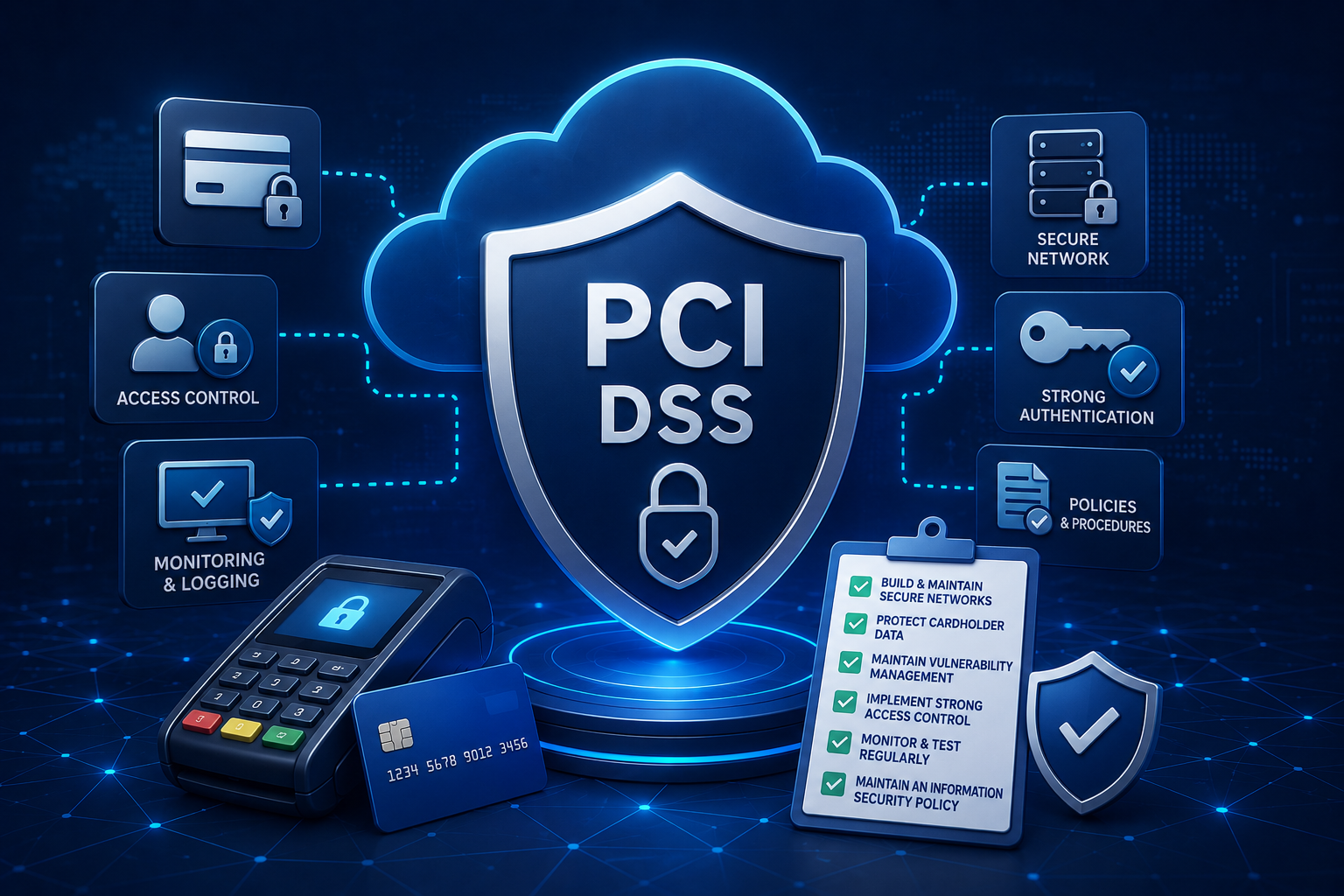
Technical evidence support, not certification. Securitain is not a QSA or ASV and does not make any organization “PCI compliant.” It assesses AWS access controls and maps findings to access-control areas to support your PCI DSS effort; validation is performed by qualified assessors.
The problem teams bring to PCI DSS
PCI DSS expects access to cardholder data to be restricted to those who need it, with strong authentication and tight control over privileged accounts. In AWS, excessive IAM permissions and unguarded trust relationships quietly widen that access. Securitain identifies and evidences those access-control issues so you can reduce unnecessary access around payment environments.
AWS access controls, assessed read-only
From observation to evidence
How PCI DSS results appear
Each finding maps to the relevant PCI DSS control areas, with a justification drawer showing the check used, expected vs observed configuration, the affected account and ARN, an evidence timestamp, and remediation guidance. Securitain describes control areas rather than asserting authoritative control IDs.
What stays manual and organizational
Securitain supports
- Evidence of restricted, least-privilege AWS access
- MFA and access-key hygiene findings with remediation
- External-exposure findings on supported services
- Mapping of IAM findings to access-control areas
Your program completes
- Defining full PCI scope and the cardholder data environment
- Network segmentation and validation
- Secure software development lifecycle
- Vulnerability management and penetration testing
- Physical security controls
- The assessor’s conclusions (QSA/ASV)
Planned — not current coverage
Common questions
Does Securitain make us PCI compliant?
No. PCI DSS validation is performed by a QSA or via self-assessment against full scope. Securitain is not a QSA or ASV; it provides technical evidence for AWS access controls that supports your PCI work.
Does it cover all of PCI DSS?
No. It focuses on AWS IAM access controls. Scoping, segmentation, secure SDLC, vulnerability management, penetration testing, and physical security are out of scope and remain your responsibility.
Can the output go to our assessor?
You can share the assessment report and evidence as supporting technical material. The assessor reaches the compliance conclusion.
Strengthen your PCI DSS access controls
Connect a read-only role and see how your AWS IAM findings support your PCI DSS evidence — with mapping, justification, and remediation guidance on every scan.